
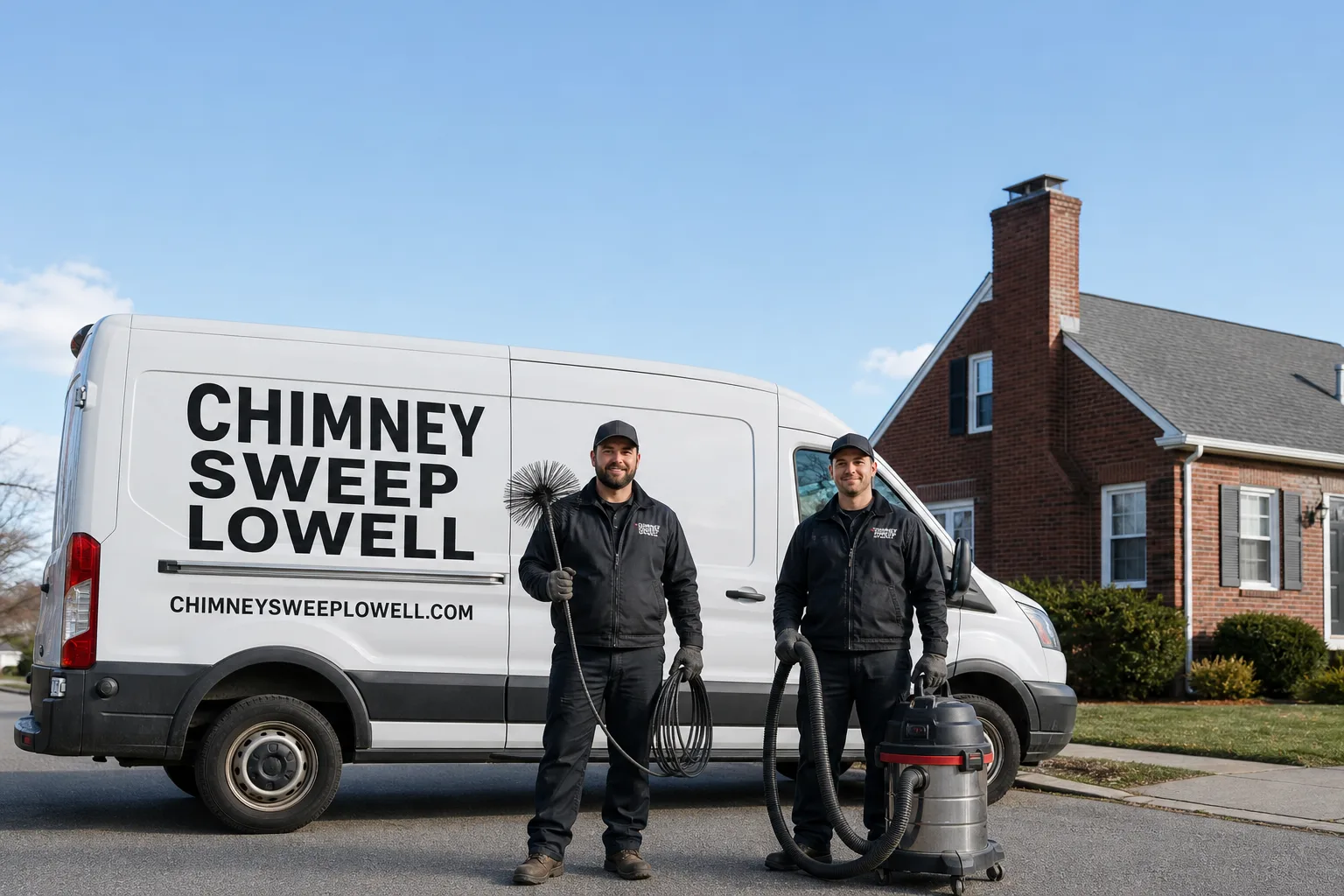
Fast, Reliable Dryer Vent Cleaning Across Lowell
If your dryer is taking two or three cycles to get a load dry, the duct behind it is probably packed with lint. Dryer vent cleaning in Lowell means more than pulling a wad of lint out of the screen. In this city’s older housing, it means tracing a duct that was often added long after the building went up, finding where it bends or sags, and clearing it so air moves the way it should. We’ve worked in these old buildings enough to know what we’re walking into. Call (888) 450-3059 for a free estimate.
Why Lowell Homeowners Call Chimney Sweep Lowell for Dryer Vent Cleaning
Lowell is full of houses where the dryer vent was an afterthought, and that’s exactly the kind of job we’ve built our dryer vent cleaning work around. We hear the same complaints again and again: clothes that stay damp, a dryer that runs hot, a lint trap that fills faster than it used to. Instead of guessing, we run the duct with a camera and show you what’s in there. If it’s a short clean run with nothing wrong, we tell you so and leave it at that. If there’s a crushed elbow or a disconnected section hidden behind a wall, you’ll see the footage before we recommend anything.
We’re a venting specialist, not a general handyman outfit, and we carry professional-grade parts rather than hardware-store substitutes. That matters when a duct has to come out and go back in. Our technicians have up to 12 years of experience with older New England housing, which is a different animal from a modern subdivision build. In Lowell’s triple-deckers and converted mill buildings, the goal is to understand what’s actually behind the wall before we touch it. You get a straight read on your own system, and you decide what makes sense. We answer 24/7, and fast dispatch runs from 7am to 7pm, Sunday through Friday.
Our Dryer Vent Cleaning Services in Lowell
Full Vent System Cleaning
A full vent system cleaning clears the whole run, not just the section you can reach. In a Lowell triple-decker, that run might travel 15 or 20 feet through an interior wall with several elbows, so we clean it end to end and confirm airflow with the duct reassembled. The exterior hood gets checked and cleared at the same time. You’ll know what the duct looked like before and after.
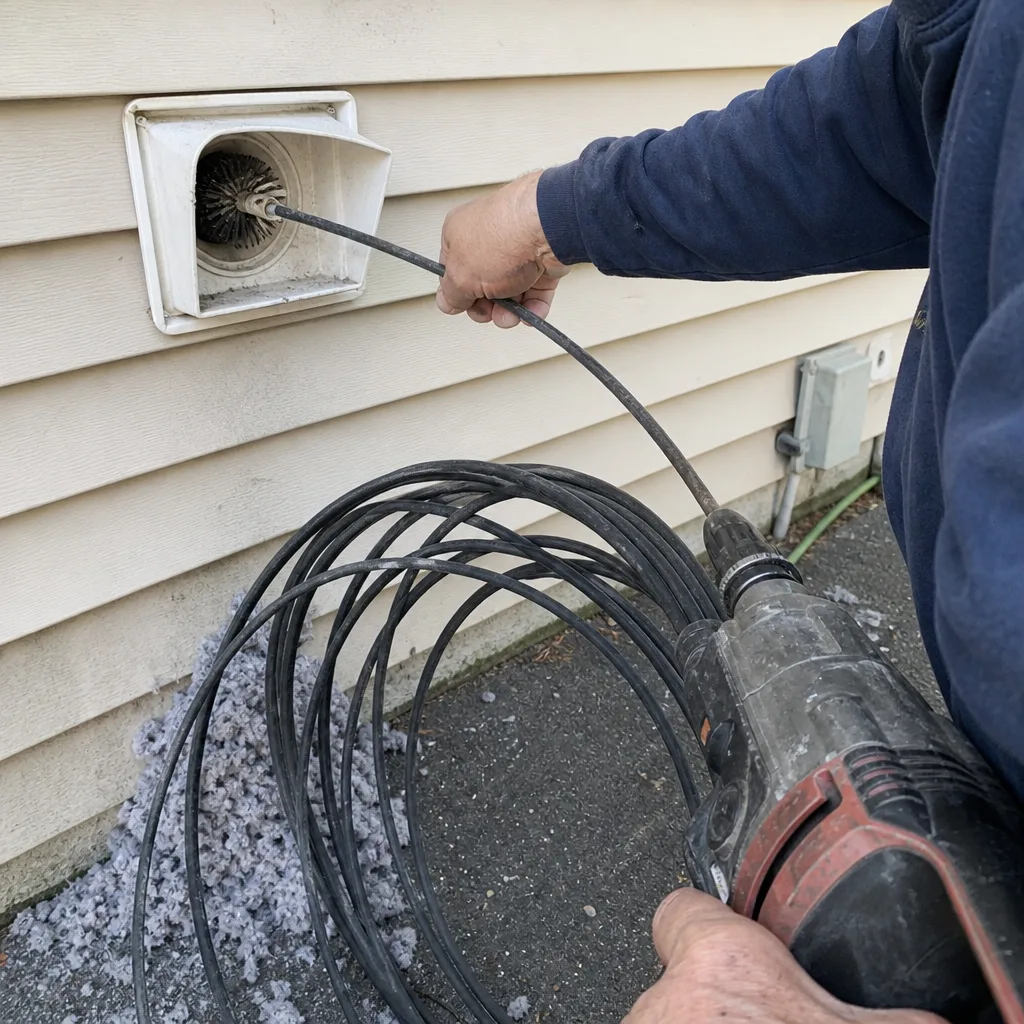
Lint Removal
Lint doesn’t just sit in the screen and the first few feet of pipe. It coats the walls of the duct, and in a long, sagging run it collects in the low spots where air slows down. We clear that buildup along the full length of the vent, then check that nothing’s left blocking the path. Older Lowell homes with long runs are where this matters most.
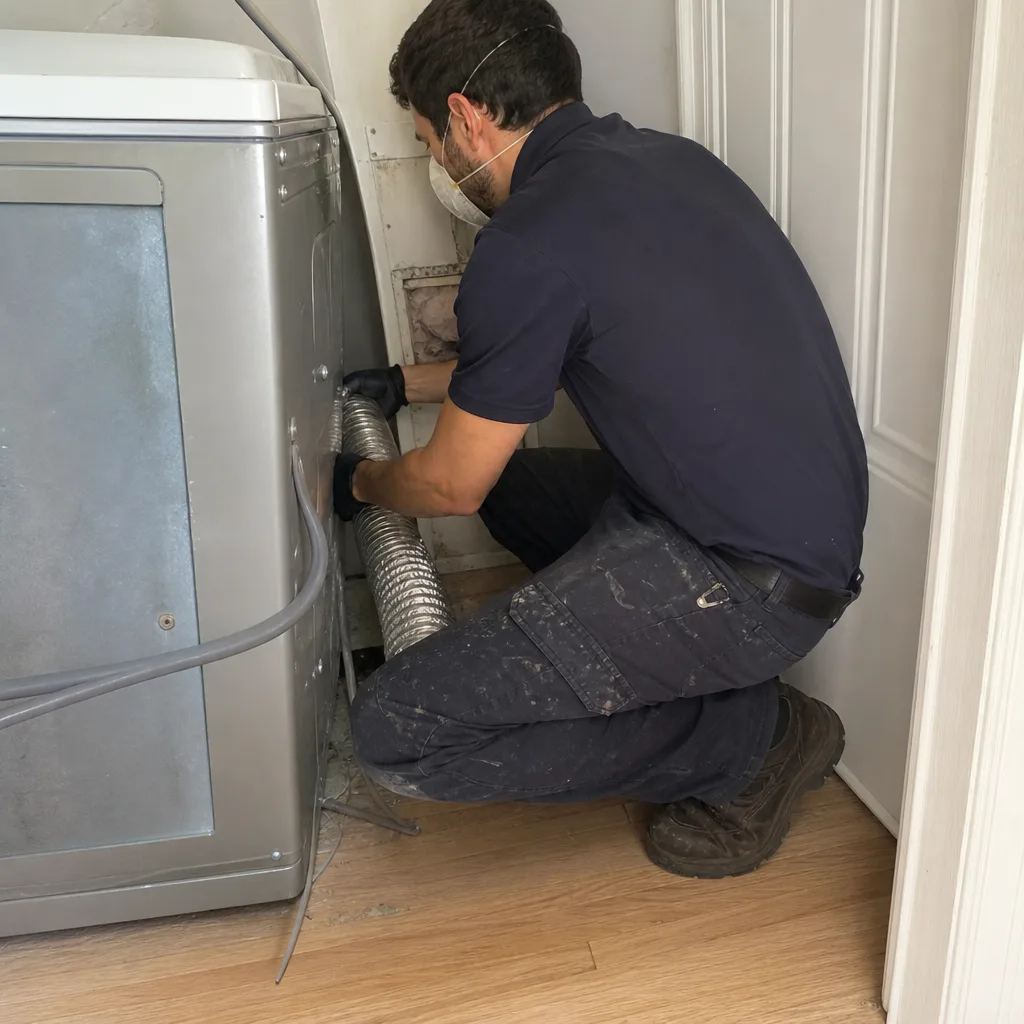
Lint Screen & Trap Cleaning
The screen and trap are the first line of defense, and they’re easy to neglect in a busy household. We clean them out and check that the trap seats properly so lint goes where it’s supposed to. If the screen is torn or doesn’t fit right, we’ll point that out so you can replace it.
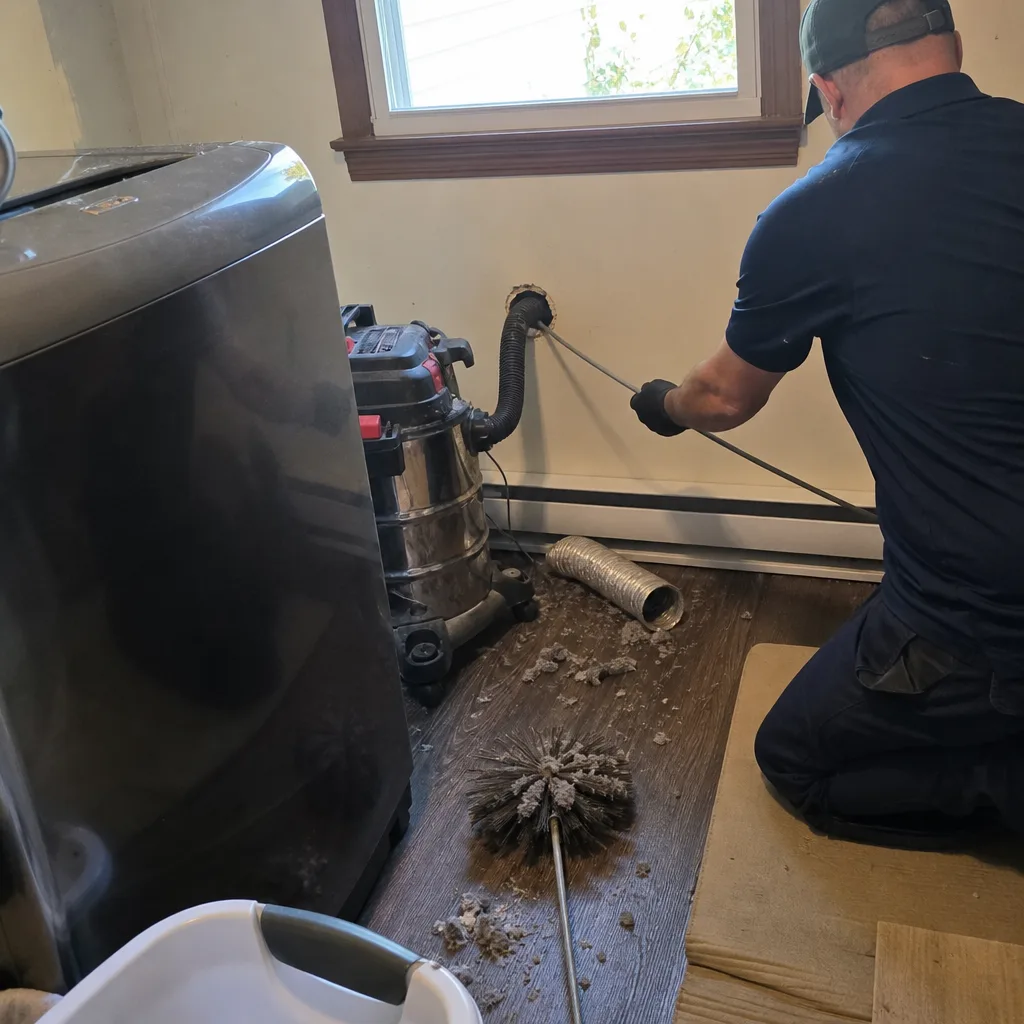
Rooftop Vent Cleaning
Some Lowell homes vent the dryer out through the roof rather than a side wall, especially where a laundry was added in an attic or upper unit. Rooftop hoods collect lint, debris, and bird nesting material that a ground-level clean never reaches. We clear the hood and the upper section of the run so the whole system breathes.
Bird Nest & Debris Removal
An open or damaged exterior hood is an invitation. Birds, squirrels, and windblown debris find their way into dryer vents with surprising ease, and a blocked hood stops airflow just as effectively as a lint clog. We pull out nesting material and debris and check that the hood still closes as it should. In Lowell, an old hood that’s lost its flap is a common culprit.
Common Dryer Vent Cleaning Problems We See in Lowell Homes
The housing here creates a particular set of vent problems that you don’t find in newer construction. Here’s what comes up most often.
- Long, winding runs added after construction. In older Lowell homes, the laundry was often carved out of a back room or a closet, and the duct was routed wherever it fit. Those runs tend to be long, with multiple bends that trap lint and cut airflow.
- Crushed or disconnected foil flex duct behind a wall. Old foil flex duct sags, kinks, and sometimes comes apart entirely inside a wall cavity or ceiling. A crushed section chokes the whole run, and a disconnected one dumps lint and damp air where it shouldn’t go.
- Shared or improper vent paths in triple-deckers. In Lowell’s dense triple-deckers, a clog in one unit’s duct can restrict airflow for a neighbor through a shared chase. Improperly terminated vents can also push lint and moisture between units.
- Bent, torn, or blocked exterior hoods. An old hood that’s lost its flap lets in birds, debris, and weather, all of which block the exit. That’s a vent that’s clear inside but still sealed off outside.
The Triple-Decker Problem Nobody Warns You About
Lowell has a lot of 19th- and early-20th-century mill-worker housing. Triple-deckers, wood-frame tenements, converted mill buildings. That’s not trivia. It explains why dryer vent work here so often turns into an investigation.
When a laundry area was added to a building like this, the duct had to go somewhere. In practice, it often snakes through a shared wall cavity or was run after the fact into whatever space was available. Sometimes two or three units end up venting into the same chase. That’s the part generic cleaning pages skip. A clog or a crushed duct in one unit can quietly affect airflow for the people next door, and a homeowner with slow drying has no idea their vent is shared.
A typical job in a Lowell triple-decker goes something like this. The vent was added when a laundry was carved out of a back room, so it runs 15 or 20 feet through an interior wall with several elbows, using the old foil flex duct. The telltale sign is clothes taking two or three cycles to dry. A technician usually finds the duct crushed or disconnected behind the wall, then replaces the run with rigid or semi-rigid metal duct and clears the exterior hood. Cleaning alone wouldn’t have fixed it. The duct itself was the problem.
The cold New England winters matter too. Homes here hold 20 to 30°F for stretches from November through March, so dryers run hard and lint builds faster. A vent that was passable in October can be a real restriction by January. The old brick chimneys and converted mill buildings of Lowell are a separate subject, but the same underlying fact ties them together: this city’s buildings were built for a different set of expectations than the ones we put on them now.
Pricing for Dryer Vent Cleaning in Lowell, MA
Most dryer vent cleanings in Lowell fall somewhere in the $120 to $225 range. A short, straight run that vents out a side wall is on the lower end. A long, winding run, a rooftop termination, or a vent that needs its duct replaced behind a wall pushes toward the higher end. Bird nest and debris removal may add to the job if the hood is packed and the run is blocked. We set a flat price by written estimate before any work starts, so you know what you’re paying up front. Estimates are free, and if your vent is clean and needs nothing, we’ll tell you that too. Call (888) 450-3059 to book.
We Also Serve Cities Near Lowell
We also help homeowners just outside the city, including Andover, Pinehurst, Lawrence, and Methuen Town. If you’re in one of those towns and your dryer isn’t working like it should, the same approach applies. See our coverage for Lowell and the surrounding area, or call and we’ll sort out the details. (888) 450-3059.
Serving Lowell, MA – Our Local Coverage Area
We serve Lowell and nearby communities. Use the map below to see the area we cover. If you’re nearby, we can almost certainly help.
FAQs – Dryer Vent Cleaning in Lowell
It’s usually a restricted duct, not a failing dryer. In Lowell’s triple-deckers, the vent is often long and winding because the laundry area was added after the building was built, and that long run collects lint and loses airflow. A crushed section or a shared chase can slow things down further. We run a camera through the duct to find the actual cause. Call (888) 450-3059 for a free estimate.
Three signs point to it: clothes that take multiple cycles to dry, a dryer that feels hot to the touch on top, and lint collecting where it shouldn’t or dampness near the duct path. You can check the exterior hood for strong airflow when the dryer runs, but a crushed section behind a wall is hard to spot from outside. A camera inspection shows exactly what’s happening. Call (888) 450-3059 and we’ll take a look.
Yes, it usually does. A laundry added after the fact means the duct was routed into whatever space was available, often through an interior wall with several elbows and sometimes using old foil flex duct. Those runs are where we find crushed or disconnected sections most often. Cleaning needs to account for the actual layout, not a textbook one. Call (888) 450-3059 for a free estimate.
Don’t run the dryer until the hood is cleared, because a blocked hood traps heat and lint in the duct. A damaged or missing flap is how the birds got in, so the hood usually needs to be cleared and checked together. We pull out the nesting material and confirm the hood still closes. Call (888) 450-3059 and we’ll get it sorted.
Once a year is a sensible baseline for most households, and older Lowell homes with long or winding runs often benefit from a check sooner. If your clothes are taking two cycles to dry or the dryer feels unusually hot, that’s your signal to stop waiting. A short run with light use can stretch longer. Call (888) 450-3059 for a free estimate.
Book Dryer Vent Cleaning in Lowell
If your dryer is slow, hot, or leaving clothes damp, the duct is the place to look, and you shouldn’t wait until something fails. We’ll trace the run, show you what we find, and quote the work in writing before anything starts. Call (888) 450-3059 for a free estimate. We answer 24/7, with fast dispatch from 7am to 7pm, Sunday through Friday.
Written by the team at Chimney Sweep Lowell.